


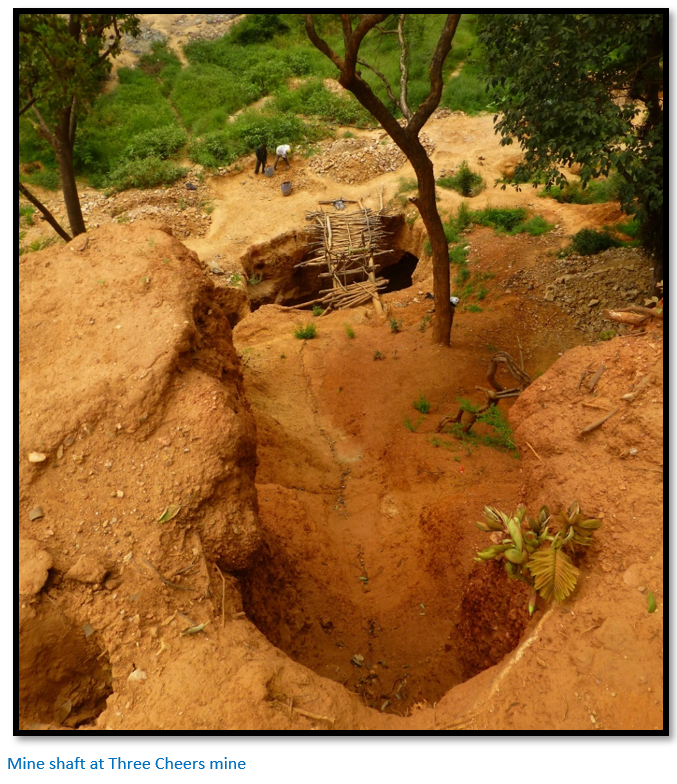
Small-scale mining has become a significant economic activity in Matabeleland South, Zimbabwe. This sector, often referred to as artisanal and small-scale mining (ASM), plays a crucial role in poverty alleviation and employment creation. However, it also presents several challenges that need to be addressed to ensure sustainable development.
Economic Contributions
Small-scale mining in Matabeleland South has been instrumental in generating income and providing employment opportunities for many local communities. According to a study by Sibanda et al. (2020), ASM activities have significantly improved the livelihoods of miners by enabling them to afford better living standards, purchase agricultural inputs, and send their children to school1. This sector has become a vital source of income for many families, especially in rural areas where formal employment opportunities are scarce.
Environmental and Social Challenges
Despite its economic benefits, small-scale mining in Matabeleland South is associated with several environmental and social challenges. The unregulated nature of ASM often leads to environmental degradation, including deforestation, soil erosion, and water pollution. The use of harmful chemicals like mercury and cyanide in gold extraction poses severe risks to both the environment and human health2.
Moreover, the sector is plagued by issues such as lack of financial and institutional support, unsafe working conditions, and conflicts over mining claims. The high incidence of mine accidents and the spread of diseases, including sexually transmitted infections, are significant concerns that need urgent attention1.
Rise of Violent Crimes
In recent years, there has been a noticeable rise in violent crimes in Matabeleland South, particularly in areas with high mining activity. The influx of people seeking mining opportunities has led to increased competition and conflicts, sometimes resulting in violent confrontations3. The police have raised concerns over the frequency of murder cases and crimes of passion in the region3.
Teenage Pregnancies and the Girl Child
The high cases of teenage pregnancies and child marriages in Matabeleland South expose the poor state of sexual reproductive health rights (SRHR) services in the province1. A recent report highlighted that about 290 teenage pregnancies and 65 child marriages were recorded in a short period1. The lack of access to SRHR services, coupled with extended school closures due to the COVID-19 pandemic, has exacerbated this issue1.
The economic impact on the girl child is profound. Many young girls are forced into early marriages or pregnancies, which significantly hinders their educational and economic opportunities. The community’s cultural norms often prioritize boys’ education over girls’, leaving the girl child economically disadvantaged and vulnerable1.
Government and Community Initiatives
The government has taken steps to regulate and support small-scale mining activities. For instance, the forfeiture of non-compliant mining claims aims to ensure that mining operations adhere to legal and environmental standards4. However, more needs to be done to provide financial assistance and technical support to small-scale miners to enhance their productivity and safety.
Community initiatives and partnerships with larger mining companies can also play a crucial role in addressing the challenges faced by small-scale miners. By fostering collaboration and providing necessary resources, it is possible to create a more sustainable and inclusive mining sector.
References
1: Sibanda, S. M., Mapuva, J., & Tambura, P. (2020). Assessing the Role of Artisanal and Small-Scale Mining in Poverty Alleviation: A Case of Barn Mining Area, Ward 25 Matopo: Matabeleland South Province. Environmental Management and Sustainable Development, 9(2), 169-190. https://doi.org/10.5296/emsd.v9i2.16990
4: Mining Index Zimbabwe. (2021, August 10). Gvt forfeits 200 gold mines in Matabeleland South. Retrieved from https://www.miningindex.co.zw/2021/08/10/gvt-forfeits-200-gold-mines-in-matabeleland-south/
2: Academia.edu. (n.d.). Institutional exclusion and the tragedy of the commons: Artisanal mining in Matabeleland South Province, Zimbabwe. Retrieved from https://www.academia.edu/86999176/Institutional_exclusion_and_the_tragedy_of_the_commons_Artisanal_mining_in_Matabeleland_South_Province_Zimbabwe
3: The Chronicle. (2022, January 26). Murders rise in Matabeleland South. Retrieved from https://www.chronicle.co.zw/murders-rise-in-matabeleland-south/